Your Phone Has Been in Your Hand Long Enough
Think about how many times you picked up your phone today. To check a notification. To ask Google something. To take a quick photo. To check the time. It adds up — and honestly, it’s exhausting.
Meta Ray-Ban AI glasses came along and asked a simple question: what if you didn’t have to do that anymore?
That question is why AI glasses are one of the most talked-about things in tech right now. Not because of flashy marketing. Because they actually solve a real, everyday problem that every single person with a smartphone feels.
So What Exactly Are Meta Ray-Ban Smart Glasses?
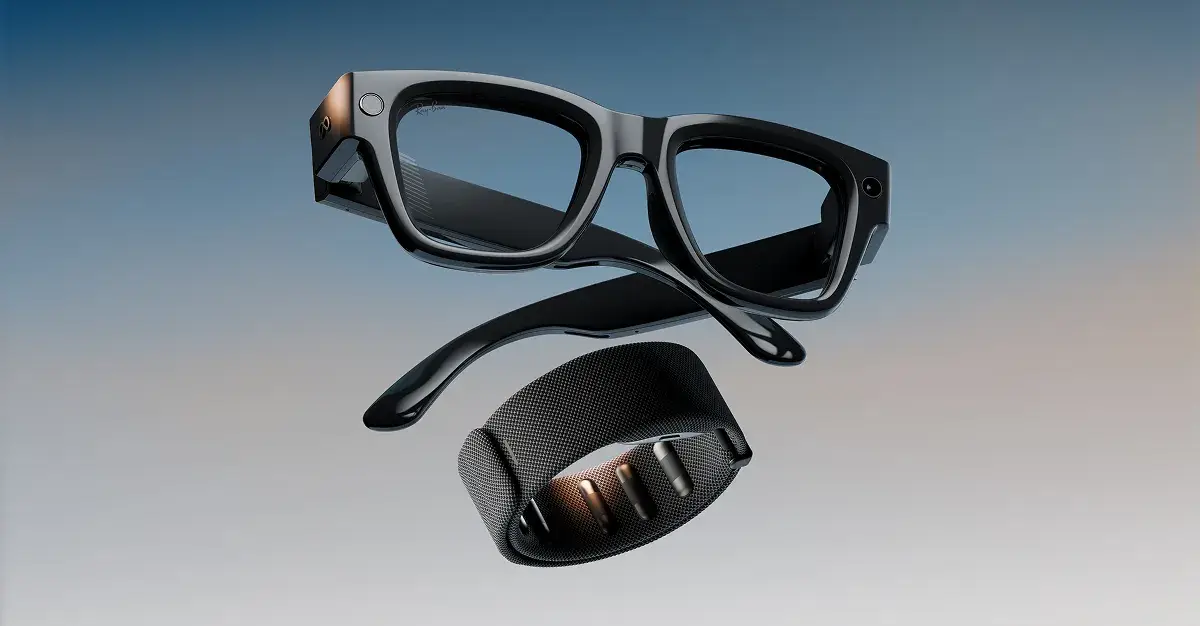
They look like regular Ray-Bans. That’s the first thing people notice. You put them on and nobody gives you a second look — which is exactly the point.
But inside those familiar frames sits some serious technology:
- A built-in Meta AI assistant you talk to like a person
- Dual cameras for photos and first-person video
- Open-ear speakers that let you hear your surroundings and your audio at the same time
- Microphones for calls and voice commands
- Live translation that works in real time
- On the display versions — a small, clean lens overlay that shows you directions, messages, and AI replies
No screen to unlock. No app to open. Just talk, listen, and see.
Why Are AI Glasses Blowing Up Right Now?
This is the part worth paying attention to. AI glasses are not new. Companies have been trying to make them work for over a decade. So why is it happening now?
People Are Done Looking Down
There is something uncomfortable that nobody really talked about for years — smartphones made us antisocial without us realizing it. Dinner tables went quiet. Walks became solo scroll sessions. Conversations got interrupted every three minutes.
AI glasses do not ask you to look away from life. They sit on your face and quietly feed you information while you stay present. That shift feels small but it is actually massive.
The AI Got Smart Enough to Be Useful
This is the real reason. Early smart glasses failed because the technology behind them was not capable enough to justify wearing them. Asking your glasses a question and getting a slow, wrong, or useless answer is worse than just pulling out your phone.
That changed. The AI models running inside these glasses today can identify what you are looking at, answer complex questions, translate languages on the spot, and remember context across a conversation. They are genuinely helpful now — and helpful technology always finds its audience.
Ray-Ban Solved the Design Problem
Google Glass had everything except the one thing that mattered most — people were willing to wear it. It looked strange, felt strange, and made everyone around you uncomfortable.
Meta partnered with Ray-Ban specifically because Ray-Ban already had cultural credibility. People wear Ray-Bans on the beach, at work, on a night out. When the technology lives inside a frame people already trust and want, adoption stops being a hurdle.
Hands-Free Is Genuinely Life-Changing
Once you experience navigating a new city without pulling out your phone, or following a recipe while cooking without touching your screen, or taking a call while carrying groceries — you understand why this form factor matters. It is not a gimmick. It removes a small but constant friction from daily life, and that compounds over time.
What Can You Actually Do With Them Day to Day?
Travelling somewhere new: You are walking through Istanbul, Rome, or Bangkok. You see a sign you cannot read. You glance at it, ask your glasses, and hear the translation in your ear. No phone out, no awkward camera pointing.
At a live event: You are watching a cricket match or a football game. You want stats on a player. You ask. You get the answer without missing the next ball.
Working out: Runners get pace updates and turn-by-turn route guidance through their ear without glancing at a watch. Cyclists navigate without looking down. Hikers identify trails and landmarks mid-step.
In a professional setting: Technicians, doctors, and field workers keep both hands on the job while getting real-time information, notes, and references through the glasses.
Just getting through the day: Asking what the weather is while getting dressed. Having a message read out to you while driving. Identifying a restaurant on the street without Googling it. Small things that add up.
The Display Version: What Makes It Different
The regular Meta Ray-Bans give you audio. The display version adds a visual layer — and it is more subtle than most people expect.
There is no full augmented reality environment being thrown at you. No virtual objects floating in the room. Just clean, minimal information at the edge of your lens. A navigation arrow. A caller’s name. A short AI response. A notification.
It sounds simple, and it is — but that simplicity is the whole point. It shows you just enough to be useful without pulling your attention away from what is in front of you. That balance is what previous display glasses always got wrong.
The Honest Downsides
Nobody should buy something based on hype alone, so here is the straight version:
The cameras make some people around you uncomfortable, and that is a fair concern. There are indicator lights that show when recording is active but not everyone notices them. This is still a social conversation that is being worked out in real time.
Battery gets you through a full day if you are a moderate user. Heavy users will want the charging case nearby by late afternoon.
The price is not cheap. It has come down from where it started but it is still an investment, not an impulse buy.
None of these are dealbreakers. They are first-generation realities that are improving with every new version.
Why This Is Bigger Than Just a Cool Gadget
The smartphone moved computing from your desk to your pocket. AI glasses are moving it from your pocket to your face — and more importantly, out of your hands.
That is not a small step. Every major shift in computing changed how people lived, worked, and communicated. This one will too. Healthcare workers who need both hands. Students who learn better through audio. Travelers who move through the world without language barriers. Parents who stay present with their kids instead of breaking eye contact to check a notification.
AI glasses are not the future. They are already here, already in use, and already showing what the next chapter of personal technology looks like.
Looking for 100% Original Tech & Mobile Accessories in Pakistan?
If you are serious about your tech, you should be just as serious about what you pair it with. Cheap, counterfeit accessories damage devices, drain batteries faster, and in some cases create real safety risks.
AW Tech Store in Pakistan is where you go when you want the real thing. Original accessories from every major brand — Apple, Samsung, and more — all verified and genuine. No knockoffs, no compromises.
Whether you are picking up a new charging cable, a case, earbuds, or any branded mobile accessory, AW Tech Store has you covered with products you can actually trust.
The Bottom Line
Meta Ray-Ban smart glasses are trending because they earned it. Not through marketing, but through quietly solving real problems in a form people are comfortable wearing. The AI is good enough. The design is good enough. The everyday usefulness is undeniable.
Whether you jump in now or wait for the next version, this technology is not going away. If anything, it is just getting started.